Digital marketing tools have changed the way businesses promote their products. These tools make online marketing easier and more effective.
In the fast-paced world of digital marketing, finding the right tools can be a game-changer. They help streamline tasks, manage campaigns, and analyze data. The right tools can save time and boost results. From social media schedulers to email marketing platforms, there is a tool for every need.
Understanding these tools is key to staying ahead in the competitive market. In this blog post, we will explore different digital marketing tools and how they can benefit your business. Get ready to discover tools that can make your marketing efforts more efficient and successful.
Introduction To Digital Marketing Tools
Explore essential digital marketing tools that help businesses grow online. These tools simplify tasks like managing social media, analyzing data, and improving SEO. Perfect for beginners looking to enhance their online presence.
Digital marketing tools have become essential for businesses today. These tools help manage and analyze marketing campaigns. They also improve efficiency and productivity. Understanding digital marketing tools is crucial. It can make a significant impact on your business’s success. Let’s explore why these tools are so important.Importance Of Digital Tools
Digital tools save time and effort. They automate repetitive tasks, like social media posting. This allows marketers to focus on strategy and creativity. These tools provide valuable insights. They track user behavior and campaign performance. This data helps in making informed decisions. Digital tools also enhance communication. They facilitate better collaboration within teams. Sharing information and updates becomes seamless.Evolution Of Marketing Technology
Marketing technology has evolved rapidly. In the past, marketing relied on traditional media. Newspapers, radio, and TV were the main channels. The internet changed everything. It introduced new ways to reach audiences. Websites, emails, and search engines became popular. Social media platforms emerged next. They offered direct interaction with customers. Marketers could now engage with their audience in real-time. Today, artificial intelligence and machine learning play a role. They analyze data and predict trends. This helps marketers create personalized experiences. Understanding the evolution of marketing technology is vital. It shows how far we have come. It also hints at what the future holds. “`
Credit: red-website-design.co.uk
Seo Tools
SEO tools are essential for digital marketers. They help improve a website’s visibility on search engines. These tools assist in keyword research, on-page optimization, and backlink analysis. They make SEO easier and more effective.
Keyword Research
Keyword research tools are crucial. They help identify popular search terms. These terms drive traffic to your site. Tools like Google Keyword Planner and Ahrefs are popular. They provide insights into search volume and competition. This helps you target the right keywords.
On-page Optimization
On-page optimization tools focus on your website’s content and structure. They ensure your site is search-engine friendly. Tools like Yoast SEO and SEMrush are useful. They analyze your content for keyword usage, meta tags, and readability. They suggest improvements to boost your rankings.
Backlink Analysis
Backlink analysis tools examine links pointing to your website. Quality backlinks improve your site’s authority. Tools like Moz and Majestic are effective. They track your backlinks and analyze their quality. They also identify potential link-building opportunities. This helps strengthen your SEO strategy.
Content Marketing Tools
Content marketing tools are essential for creating, managing, and distributing content. They help streamline processes and improve efficiency. Let’s explore some of the best tools for content marketing.
Content Creation
Creating engaging content can be challenging. Tools like Canva and Grammarly simplify this task. Canva offers templates for graphics, making design easy. Grammarly checks grammar and improves writing quality. Another great tool is BuzzSumo. It helps find trending topics and popular content ideas.
Content Management
Managing content can be a complex process. Tools like WordPress and Trello make it simpler. WordPress is a popular content management system. It offers various plugins to enhance functionality. Trello is a project management tool. It helps organize content and track progress.
Content Distribution
Distributing content is crucial for reaching a wider audience. Tools like Hootsuite and Buffer are helpful here. Hootsuite allows scheduling posts across social media platforms. Buffer offers similar features with added analytics. Mailchimp is another useful tool. It helps in email marketing campaigns.
In today’s fast-paced digital world, managing social media can feel like herding cats. But, here’s the good news: Social Media Management Tools are here to save the day! These tools streamline your social media tasks, making it easier to engage with your audience and track your progress. Let’s dive into the key features of these tools, starting with scheduling posts, engagement tracking, and analytics and reporting.
Scheduling Posts
Imagine having the power to plan and organize your social media content in advance. With scheduling tools, you can! These tools let you create and schedule posts to go live at the best times, even while you’re sleeping. Tools like Hootsuite, Buffer, and Later allow you to schedule posts across multiple platforms. It’s like having a personal assistant who never takes a day off.
Benefits of scheduling posts:
- Consistency: Keep a regular posting schedule without last-minute stress.
- Time-saving: Batch your content creation and enjoy more free time.
- Reach: Post when your audience is most active, even if you’re in a different time zone.
Engagement Tracking
Ever wonder if your posts are hitting the mark? Engagement tracking tools can help you find out. These tools monitor likes, comments, shares, and other interactions. This way, you can see what content resonates with your audience. Think of it as having a feedback loop that helps you improve and connect better with your followers.
Popular engagement tracking tools include:
- Sprout Social: Provides detailed reports on engagement metrics.
- Agorapulse: Tracks all interactions and helps manage responses.
- Zoho Social: Offers insights into how your audience is interacting with your content.
Analytics And Reporting
Numbers don’t lie, and analytics tools are your best friend when it comes to understanding your social media performance. These tools provide in-depth reports that show you what’s working and what’s not. With this data, you can make informed decisions to improve your strategy. It’s like having a crystal ball that helps you predict future success.
Key features of analytics and reporting tools:
| Tool | Feature |
|---|---|
| Google Analytics | Tracks social media traffic and conversions. |
| Socialbakers | Provides competitive analysis and performance benchmarks. |
| Iconosquare | Offers comprehensive Instagram and Facebook analytics. |
In conclusion, social media management tools are like your best friend in the world of digital marketing. They help you save time, engage effectively, and make data-driven decisions. So, why not give them a try and watch your social media presence soar?
Email Marketing Tools
When it comes to digital marketing, email marketing remains one of the most powerful tools at your disposal. It’s a direct way to communicate with your audience, nurture leads, and convert prospects into customers. The right email marketing tools can make this process smoother and more effective. In this section, we’ll dive into some key features of email marketing tools that can elevate your campaigns.
Automation Features
Email marketing tools often come equipped with automation features that can save you a ton of time and effort. Imagine setting up a welcome email series that automatically sends when someone subscribes to your newsletter. You can also create drip campaigns that nurture leads over time, sending them the right message at the right moment. This not only keeps your audience engaged but also frees you up to focus on other important tasks.
Here’s a quick look at what automation can do:
- Welcome emails
- Abandoned cart reminders
- Re-engagement campaigns
- Birthday or anniversary emails
Segmentation And Personalization
One-size-fits-all emails are a thing of the past. Today’s email marketing tools offer robust segmentation and personalization options. You can divide your audience into smaller groups based on their behavior, interests, or demographics. For example, you can send different emails to customers who have purchased from you before versus those who haven’t.
Personalization can go even further. You can use the recipient’s name, recommend products based on their past purchases, or tailor content to their preferences. This level of customization makes your emails more relevant and engaging.
Consider these segmentation criteria:
- Purchase history
- Geographical location
- Email engagement (opens, clicks)
- Interests and preferences
Performance Metrics
How do you know if your email campaigns are working? Performance metrics are the answer. Email marketing tools provide detailed analytics that help you track the success of your campaigns. You can see who opened your emails, who clicked on your links, and who made a purchase. This data is invaluable for refining your strategy and improving your results.
Key performance metrics to monitor:
| Metric | Description |
|---|---|
| Open Rate | The percentage of recipients who opened your email. |
| Click-Through Rate (CTR) | The percentage of recipients who clicked on a link within your email. |
| Conversion Rate | The percentage of recipients who took a desired action, like making a purchase. |
| Bounce Rate | The percentage of emails that could not be delivered. |
| Unsubscribe Rate | The percentage of recipients who opted out of your email list. |
By keeping an eye on these metrics, you can tweak your emails to better meet the needs and interests of your audience.
In conclusion, email marketing tools offer a range of features that can significantly enhance your digital marketing efforts. From automation and segmentation to detailed performance metrics, these tools are designed to help you connect with your audience in a meaningful way. So, why not give them a try and see how they can transform your email marketing strategy?
Paid Advertising Tools
Paid advertising tools are essential for businesses wanting to boost their online presence. These tools help create, manage, and track ads efficiently. They ensure every dollar spent on ads is worth it.
Ad Creation
Ad creation tools make designing ads easy. They offer templates to suit various industries. With these tools, you can add images, text, and other elements quickly. The user-friendly interface helps in crafting professional ads. Some tools even offer A/B testing features. This ensures you can test different ad versions. Choose the best-performing one.
Budget Management
Managing your advertising budget is crucial. Budget management tools help you allocate funds wisely. Set daily or monthly spending limits. Track your expenses in real-time. These tools alert you before you overspend. They also suggest adjustments based on performance. This helps you get the most value from your budget.
Ad Performance Tracking
Monitoring ad performance is vital for success. Ad performance tracking tools provide detailed insights. See how many people view and click your ads. Understand the conversion rates. These insights help improve future campaigns. Identify which ads work best. Optimize your strategies accordingly. Stay ahead of the competition.
Analytics And Reporting Tools
In the ever-evolving world of digital marketing, having the right tools at your disposal can make a world of difference. Analytics and reporting tools are essential for understanding your audience, measuring campaign success, and making data-driven decisions. These tools provide insights that can help you fine-tune your strategies and maximize your return on investment (ROI). Let’s dive into some of the key aspects of analytics and reporting tools, focusing on website analytics, campaign tracking, and data visualization.
Website Analytics
Website analytics tools are like the X-ray machines of your online presence. They help you see what’s happening behind the scenes of your website. By analyzing visitor behavior, you can understand which pages are popular, where your traffic is coming from, and what actions users are taking. Google Analytics is one of the most popular tools in this category. It provides detailed reports on metrics like page views, bounce rate, and session duration. With this information, you can identify what’s working and what needs improvement on your site.
Campaign Tracking
Campaign tracking tools are essential for measuring the effectiveness of your marketing efforts. They allow you to monitor the performance of various campaigns, be it email marketing, social media ads, or pay-per-click (PPC) campaigns. Tools like UTM parameters in Google Analytics help you track the source of your traffic and understand which campaigns are driving the most conversions. This way, you can allocate your budget more effectively and focus on strategies that yield the best results.
Data Visualization
Data visualization tools turn complex data into easy-to-understand visuals. These tools help you present your findings in a way that is both visually appealing and easy to digest. Tools like Google Data Studio and Tableau allow you to create customized dashboards and reports. These visuals can help you spot trends, track progress, and communicate your insights to stakeholders. After all, a picture is worth a thousand words, right?
In conclusion, analytics and reporting tools are indispensable for any digital marketer. They provide the insights needed to make informed decisions and optimize your strategies. By leveraging website analytics, campaign tracking, and data visualization tools, you can stay ahead of the competition and achieve your marketing goals.
Choosing The Right Tools
Choosing the right tools for digital marketing can feel like searching for a needle in a haystack. With a sea of options out there, how do you pick the best ones for your business? The key is to align your tools with your specific needs, budget, and future growth. In this section, we’ll explore how to make these crucial decisions.
Assessing Business Needs
Before diving into the myriad of tools available, take a step back and assess your business needs. What are your marketing goals? Are you looking to increase website traffic, improve SEO, or perhaps boost social media engagement? Knowing what you want to achieve will help you narrow down your options.
For example, if your primary goal is to enhance your social media presence, tools like Hootsuite or Buffer might be ideal. However, if you need to improve your email marketing campaigns, tools like Mailchimp or Constant Contact would be more relevant.
Budget Considerations
Budget is a critical factor when choosing digital marketing tools. High-end tools come with a hefty price tag, but that doesn’t mean you can’t find great tools on a budget. Start by determining how much you’re willing to spend.
Here’s a simple table to help you categorize your budget:
| Budget Range | Tool Options |
|---|---|
| $0 – $50/month | Google Analytics, Mailchimp (Free Plan), Buffer (Free Plan) |
| $50 – $200/month | Hootsuite, SEMrush, Ahrefs |
| $200+/month | Marketo, HubSpot, Salesforce |
Remember, sometimes free tools can be just as powerful as paid ones. Do your research and maybe test out a free trial before committing to a purchase.
Scalability And Integration
As your business grows, so will your marketing needs. It’s important to choose tools that can scale with you. Look for tools that offer different pricing tiers or additional features as you expand.
Moreover, integration is crucial. Your digital marketing tools should work seamlessly with each other. For instance, if you’re using a CRM like HubSpot, ensure it can integrate with your email marketing tool and social media platforms. This will save you time and reduce the hassle of managing multiple platforms.
In conclusion, choosing the right digital marketing tools involves a careful assessment of your business needs, budget, and growth plans. By considering these factors, you’ll be well on your way to building a robust and effective digital marketing toolkit.
Future Trends In Digital Marketing Tools
Digital marketing is always evolving. The tools we use today might look very different in the next few years. With technology advancing rapidly, it’s important to stay ahead of the curve. Let’s explore some of the future trends in digital marketing tools.
Ai And Machine Learning
Artificial Intelligence (AI) and Machine Learning (ML) are transforming digital marketing. These technologies help us understand customer behavior and preferences better. With AI, marketers can predict trends, personalize content, and improve customer experiences.
For example, AI can analyze user data to recommend products they are likely to buy. It can also automate tasks like email marketing and customer service. Imagine a chatbot that answers customer queries instantly and accurately. That’s the power of AI.
Voice Search Optimization
More people are using voice search to find information online. Devices like Amazon Alexa and Google Home are becoming common in households. This means marketers need to optimize their content for voice search.
Voice search is different from text search. People use natural language and ask questions like they would in a conversation. To optimize for voice search, focus on long-tail keywords and create content that answers common questions. This can help your website rank higher in voice search results.
Virtual And Augmented Reality
Virtual Reality (VR) and Augmented Reality (AR) are no longer just for gaming. They are becoming important tools in digital marketing. These technologies can create immersive experiences for customers.
For instance, a furniture store can use AR to let customers see how a sofa would look in their living room. VR can be used for virtual tours of properties or interactive product demos. These experiences can engage customers and influence their buying decisions.
In conclusion, the future of digital marketing tools is exciting. With AI, voice search, VR, and AR, marketers have powerful tools to reach and engage their audience. Stay updated with these trends to make the most of your digital marketing efforts.
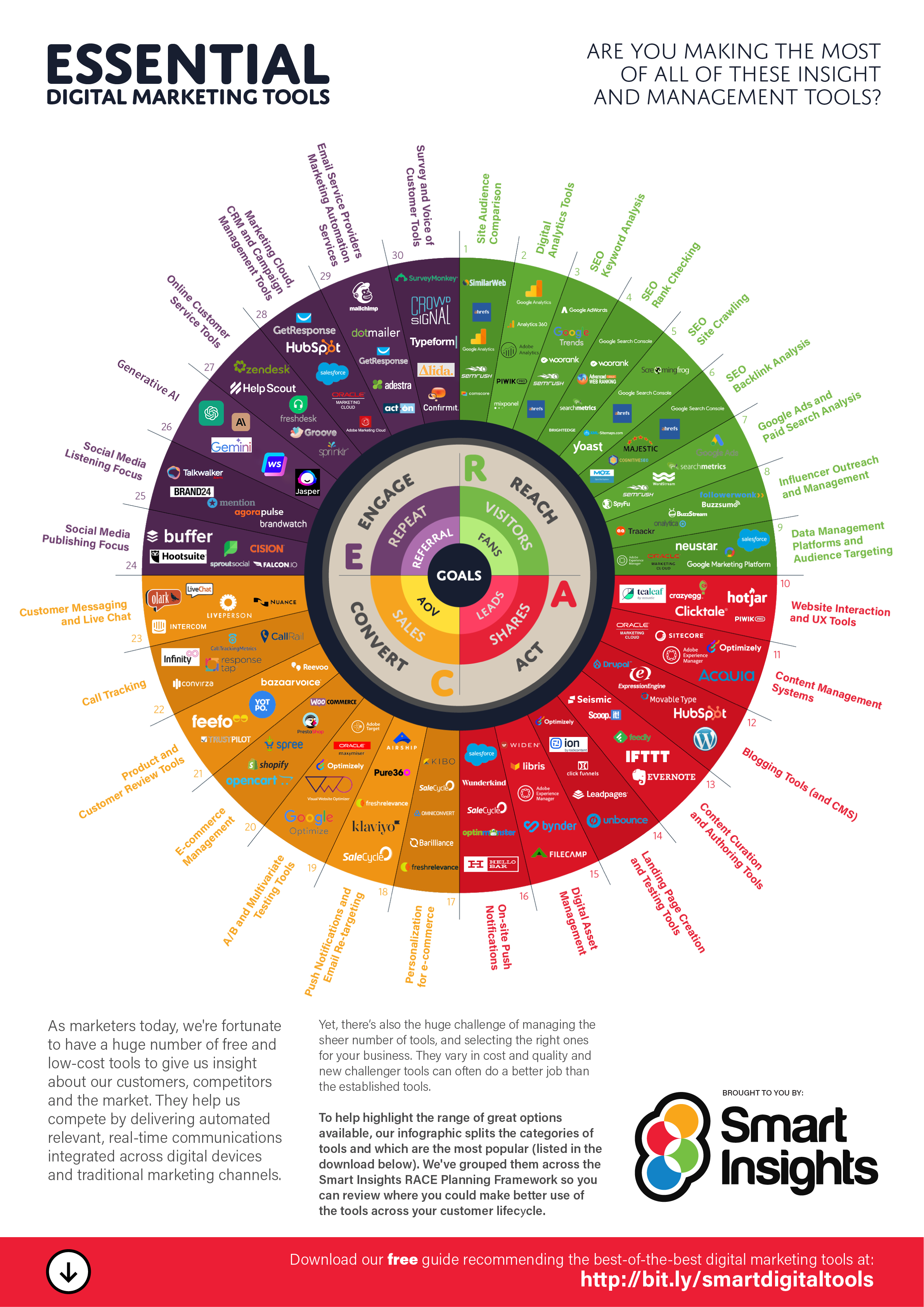
Credit: www.smartinsights.com
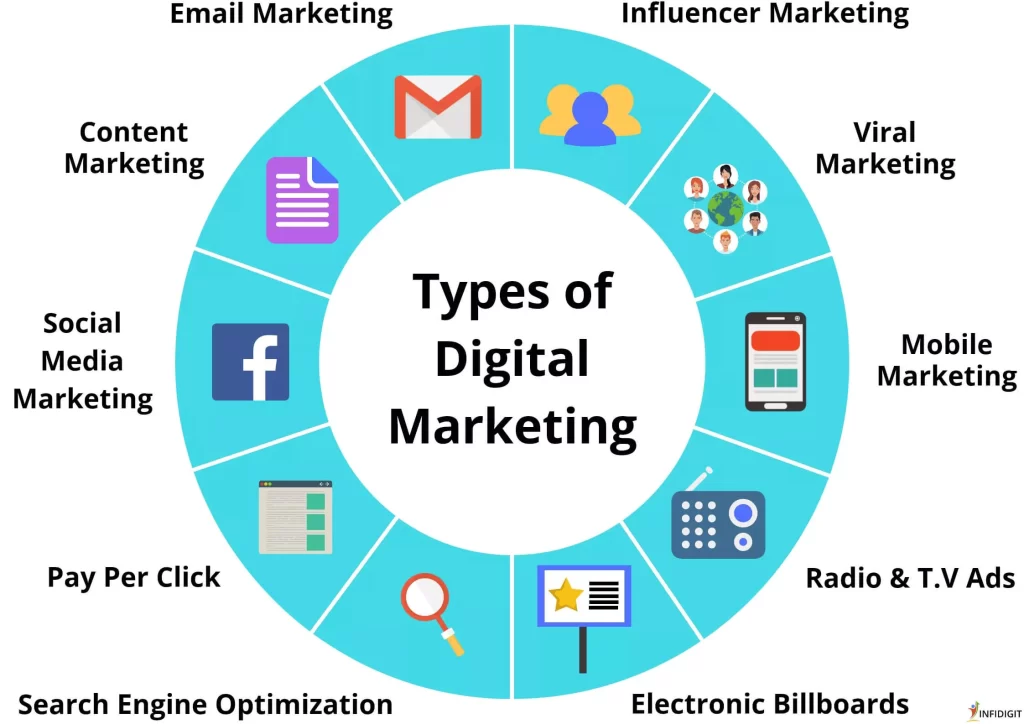
Credit: www.jaroeducation.com
Frequently Asked Questions
What Are Digital Marketing Tools?
Digital marketing tools help businesses promote products online. They include social media, email marketing, SEO, analytics, and advertising platforms.
What Are The 7 Types Of Digital Marketing?
The 7 types of digital marketing are content marketing, SEO, social media marketing, email marketing, PPC, affiliate marketing, and influencer marketing.
What Are The 4 Major Types Of Digital Marketing?
The four major types of digital marketing are content marketing, social media marketing, search engine optimization (SEO), and email marketing.
What Are The Top 5 Digital Marketing Platforms?
The top 5 digital marketing platforms are Google Ads, Facebook Ads, Instagram, LinkedIn, and Twitter. These platforms offer targeted advertising, extensive reach, and robust analytics.
Conclusion
Digital marketing tools can enhance your online presence. They simplify tasks and save time. From analytics to social media management, these tools offer great value. Choosing the right tools depends on your goals and budget. Start with the basics and gradually explore advanced options.
This approach ensures steady growth without overwhelming you. Remember, the key is consistency and adapting to new trends. Stay updated and make informed decisions. Your digital marketing strategy will benefit greatly.


0 Comments