In today’s digital age, businesses thrive online. A Digital Marketing Specialist plays a key role in this success.
A Digital Marketing Specialist uses online tools to promote products and services. They create strategies to reach the right audience. Their work includes SEO, social media, email marketing, and more. They ensure that a company’s message is clear and engaging.
This role is vital for any business wanting an online presence. Understanding the duties of a Digital Marketing Specialist can help you appreciate their impact. It can also guide you if you wish to pursue a career in this field. Stay tuned to learn more about what they do and why it matters.

Credit: nexusitgroup.com
Introduction To Digital Marketing
Digital marketing has become essential for businesses. It helps them reach their target audience online. In today’s digital age, understanding digital marketing is crucial for success. This section will introduce you to the basics of digital marketing.
What Is Digital Marketing?
Digital marketing uses the internet and online tools to promote products or services. It includes social media, email, websites, and search engines. The goal is to connect with potential customers where they spend most of their time: online.
Importance In The Modern Business World
Digital marketing is vital for modern businesses. Most people use the internet daily. Businesses can reach a larger audience through online marketing. This helps them grow and compete in the global market.
Another benefit of digital marketing is cost-effectiveness. Traditional marketing methods, like TV ads, can be expensive. Digital marketing often costs less. It also provides better targeting options. Businesses can reach specific audiences based on demographics, interests, and behavior.
Digital marketing also offers measurable results. Tools like Google Analytics help track the performance of campaigns. Businesses can see what works and what doesn’t. This allows them to adjust their strategies for better results.
Key Digital Marketing Channels
Understanding key digital marketing channels is crucial for any specialist. These channels help businesses reach their target audience. They ensure effective communication and engagement. Let’s explore the key digital marketing channels that every specialist should know.
Search Engine Optimization (seo)
SEO is about improving your website’s visibility on search engines. This involves using relevant keywords. High-quality content also plays a vital role. Proper SEO can drive organic traffic to your site.
Pay-per-click (ppc) Advertising
PPC advertising is a model where advertisers pay each time someone clicks their ad. It offers immediate visibility. Google Ads and Facebook Ads are popular PPC platforms. These ads can target specific demographics and interests.
Social media marketing uses platforms like Facebook, Instagram, and Twitter. It helps businesses connect with their audience. Engaging content and regular updates are key. Social media can boost brand awareness and loyalty.
Content Marketing
Content marketing involves creating valuable content. This can be blogs, videos, or infographics. The goal is to attract and retain customers. Quality content answers users’ questions and solves their problems.
Role Of A Digital Marketing Specialist
The role of a Digital Marketing Specialist is vital in today’s digital age. They help businesses build their online presence and reach their target audience. By using various digital channels, they create strategies to promote products and services effectively.
Core Responsibilities
A Digital Marketing Specialist manages and optimizes online campaigns. They analyze data to understand customer behavior. They also create content for websites, social media, and email marketing. Monitoring and improving search engine rankings is another key task. Additionally, they work with other teams to ensure consistent branding.
Essential Skills And Qualifications
Strong analytical skills are crucial. A Digital Marketing Specialist needs to interpret data and make informed decisions. They should have experience with SEO, SEM, and content marketing. Familiarity with tools like Google Analytics is essential. Good communication skills are also important. They must convey ideas clearly to team members and clients.
Relevant qualifications include a degree in marketing or a related field. Certifications in digital marketing can be beneficial. Practical experience through internships or previous jobs adds value. Staying updated with the latest trends and tools is vital for success.
Developing Effective Strategies
Being a successful Digital Marketing Specialist requires more than just creativity; it demands a strategic approach. Developing effective strategies is crucial in ensuring that marketing efforts yield the desired results. In this section, we will explore three fundamental aspects of strategy development: Market Research and Analysis, Setting Clear Objectives, and Creating a Marketing Plan.
Market Research And Analysis
First things first, you need to know your audience. Market research and analysis are the backbone of any effective digital marketing strategy. Understanding who your customers are, what they want, and how they behave online can make or break your marketing efforts.
- Identify your target audience: Use tools like surveys and social media insights to gather data.
- Analyze competitors: Look at what other businesses in your industry are doing. What works for them? What doesn’t?
- Stay updated: The digital landscape is always changing. Keep an eye on trends and shifts in consumer behavior.
By conducting thorough market research, you can tailor your strategies to meet the specific needs of your audience, leading to more effective and efficient marketing campaigns.
Setting Clear Objectives
Once you have a good understanding of the market, it’s time to set clear, achievable objectives. These objectives will guide your marketing efforts and help you measure success.
- Specific: Your goals should be clear and specific. For example, instead of saying “increase website traffic,” aim for “increase website traffic by 20% in three months.”
- Measurable: Ensure your goals can be measured. Use tools like Google Analytics to track your progress.
- Achievable: Set realistic goals that you can actually achieve. Overly ambitious goals can be discouraging.
- Relevant: Your objectives should align with your overall business goals.
- Time-bound: Set a deadline for achieving your goals. This adds a sense of urgency and helps keep you on track.
Setting clear objectives provides a roadmap for your marketing strategy, ensuring all efforts are aligned towards achieving specific outcomes.
Creating A Marketing Plan
With your market research and objectives in place, the next step is to create a comprehensive marketing plan. This plan will outline the steps you need to take to achieve your goals.
Here’s a simple template to get you started:
| Step | Description |
|---|---|
| 1. Define your value proposition | What makes your product or service unique? Why should customers choose you? |
| 2. Choose your marketing channels | Decide where you will focus your efforts – social media, email marketing, PPC, SEO, etc. |
| 3. Create a content calendar | Plan your content in advance. This helps ensure consistency and allows you to align your content with your marketing goals. |
| 4. Set your budget | Determine how much you can spend on each aspect of your marketing strategy. |
| 5. Monitor and adjust | Regularly review your performance and make adjustments as needed. Flexibility is key in digital marketing. |
Creating a detailed marketing plan helps you stay organized and focused. It ensures that all aspects of your strategy work together harmoniously to achieve your objectives.
Developing effective strategies may seem daunting, but with thorough research, clear objectives, and a solid plan, you’ll be well on your way to digital marketing success.
Seo Best Practices
In the ever-evolving world of digital marketing, SEO (Search Engine Optimization) remains a critical component. As a Digital Marketing Specialist, understanding and implementing SEO best practices is essential. These practices not only enhance your website’s visibility but also drive organic traffic, ultimately leading to higher conversions. Let’s dive into some fundamental aspects of SEO: Keyword Research, On-Page Optimization, and Link Building.
Keyword Research
Keywords are the backbone of SEO. They are the phrases and terms that people type into search engines. To find the right keywords, you need to understand your audience and their search behavior. Here’s how you can start:
- Brainstorm Ideas: Think about the words and phrases that are relevant to your business.
- Use Tools: Tools like Google Keyword Planner, SEMrush, and Ahrefs can help you discover popular keywords.
- Analyze Competitors: Look at what keywords your competitors are using. This can give you insights into what’s working in your industry.
Once you have a list of potential keywords, evaluate their search volume, competition, and relevance. Aim for a mix of high-volume and long-tail keywords to balance traffic and competition.
On-page Optimization
On-page optimization involves making sure each page on your website is optimized for search engines. This includes:
- Title Tags: Ensure your titles are compelling and include your primary keyword.
- Meta Descriptions: Write clear and concise meta descriptions that include keywords and encourage clicks.
- Header Tags: Use header tags (H1, H2, H3) to structure your content. This makes it easier for search engines to understand.
- Alt Text: Use descriptive alt text for images to improve accessibility and SEO.
- Internal Linking: Link to other relevant pages on your site to help search engines crawl your site better.
Remember, the goal is to make your content easy to read for both users and search engines. Simple, clear, and relevant content always wins the game.
Link Building
Link building is all about getting other websites to link back to your site. This is crucial because search engines see backlinks as a vote of confidence. Here are some effective strategies:
- Guest Blogging: Write articles for other blogs in your industry. Include a link back to your site.
- Influencer Outreach: Reach out to influencers and ask them to share your content.
- Broken Link Building: Find broken links on other websites and suggest your content as a replacement.
- Create High-Quality Content: The better your content, the more likely people are to link to it.
Building a strong backlink profile takes time, but it’s worth the effort. Quality over quantity is the key here.
By mastering these SEO best practices, you’ll be well on your way to becoming a proficient Digital Marketing Specialist. Remember, SEO is not a one-time task but an ongoing process. Stay updated with the latest trends and keep refining your strategies for the best results.
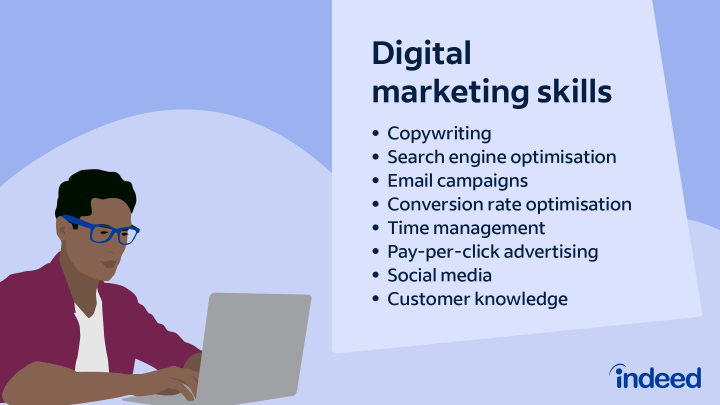
Credit: ca.indeed.com
Social media is a powerful tool for digital marketing specialists. It helps reach a broad audience and build a strong online presence. By leveraging social media, businesses can connect with their target market more effectively. This section explores how to choose the right platforms, build engagement and community, and advertise on social media.
Choosing The Right Platforms
Not all social media platforms are the same. Each one caters to a different audience and serves unique purposes. It’s important to choose the right platforms that align with your target audience. For example, LinkedIn is great for B2B connections. Instagram suits visual content and younger audiences. Facebook has a broad user base and offers detailed ad targeting options.
Engagement And Community Building
Engagement is key to a successful social media strategy. Respond to comments and messages promptly. Share valuable content that resonates with your audience. Ask questions and encourage discussions. Building a community fosters trust and loyalty. People are more likely to engage with brands they feel connected to.
Advertising on social media can boost visibility and reach. Platforms like Facebook, Instagram, and Twitter offer various ad formats. These include image ads, video ads, and carousel ads. Use targeting options to reach specific demographics. Track ad performance with analytics tools to optimize your campaigns. Allocate your budget wisely to get the best results.
Analyzing And Measuring Success
In the world of digital marketing, it’s not enough to just launch campaigns and hope for the best. To truly succeed, you must analyze and measure your efforts. This helps you understand what’s working, what’s not, and where to make improvements. Let’s delve into the critical aspects of analyzing and measuring success as a Digital Marketing Specialist.
Key Performance Indicators (kpis)
Key Performance Indicators, or KPIs, are the lifeblood of any marketing strategy. These metrics help you gauge the effectiveness of your campaigns. Think of KPIs as the speedometer in your car. They tell you if you’re moving fast enough towards your goals or if you need to accelerate.
- Website Traffic: How many visitors does your site attract?
- Conversion Rate: What percentage of visitors take the desired action?
- Click-Through Rate (CTR): How often do people click on your ads or links?
- Return on Investment (ROI): Are you getting your money’s worth?
By focusing on these KPIs, you can pinpoint strengths and weaknesses in your strategy.
Using Analytics Tools
In today’s digital age, numerous tools are available to help you track your KPIs. Google Analytics, for instance, is a powerful, free tool that provides a wealth of information about your website traffic and user behavior.
| Tool | Primary Function | Cost |
|---|---|---|
| Google Analytics | Website Traffic Analysis | Free |
| SEMrush | SEO and PPC Insights | Subscription |
| Hootsuite | Social Media Management | Subscription |
Using these tools, you can collect data on your campaigns and make informed decisions. It’s like having a map that shows you where to go next.
Adjusting Strategies Based On Data
Once you have the data, it’s time to act on it. This is where the rubber meets the road. If a particular campaign isn’t performing, you need to pivot. Maybe tweak your ad copy, change your target audience, or increase your budget.
- Analyze the data and identify patterns.
- Determine what changes need to be made.
- Implement adjustments and monitor results.
Remember, digital marketing is a continuous process. It’s like cooking; you need to taste as you go and adjust the seasoning. By regularly analyzing and adjusting your strategies, you ensure your marketing efforts remain effective and efficient.
So, are you ready to take your digital marketing to the next level? By focusing on analyzing and measuring success, you’ll be well on your way to achieving your marketing goals. Happy optimizing!
Future Trends In Digital Marketing
The world of digital marketing is always changing. With new technologies and shifts in consumer behavior, it’s important to keep up with the latest trends. If you’re a Digital Marketing Specialist, you need to be prepared for what’s coming next. Let’s explore some of the future trends that will shape digital marketing in the coming years.
Emerging Technologies
Technology is advancing rapidly. Each new development brings new opportunities for digital marketers. Here are some emerging technologies that will impact the future of digital marketing:
- Artificial Intelligence (AI): AI can analyze data faster than humans. It can help in understanding customer behavior and creating personalized marketing strategies.
- Virtual Reality (VR) and Augmented Reality (AR): These technologies offer immersive experiences. They are great tools for engaging customers in new and exciting ways.
- Voice Search: With the rise of smart speakers, optimizing content for voice search is becoming essential.
Adopting these technologies can give you a competitive edge. They help in creating more effective and engaging marketing campaigns.
Predictions For The Next Decade
What will digital marketing look like in the next ten years? It’s hard to say for sure, but here are some predictions:
- Increased Personalization: Customers expect personalized experiences. Brands will use data to create highly tailored content and offers.
- More Focus on Privacy: With growing concerns about data privacy, marketers will need to be transparent and build trust with their audience.
- Rise of Video Content: Video continues to dominate. Short, engaging videos will be key to capturing attention.
- Integration of AI: AI will become more integrated into everyday marketing tasks, making processes more efficient.
These predictions highlight the importance of staying adaptable. As a Digital Marketing Specialist, being open to change and learning new skills will be crucial.
In conclusion, the future of digital marketing is exciting and full of potential. By keeping an eye on emerging technologies and trends, you can stay ahead of the curve and ensure your marketing strategies remain effective.

Credit: www.reliablesoft.net
Frequently Asked Questions
What Is A Digital Marketing Specialist?
A digital marketing specialist creates and implements online marketing strategies. They use SEO, social media, email, and content marketing to drive traffic and sales.
Is Digital Marketing High Paying?
Yes, digital marketing can be high paying. Experienced professionals and specialists often earn competitive salaries in this field.
How Do I Become A Digital Specialist?
To become a digital specialist, gain relevant education, acquire certifications, build a portfolio, gain experience, and stay updated with industry trends.
Is Digital Marketing Specialist A Good Job?
Yes, a digital marketing specialist is a good job. It offers excellent career growth, high demand, and competitive salaries.
Conclusion
A digital marketing specialist can significantly boost your business’s online presence. Their skills and strategies drive targeted traffic and increase engagement. Investing in a specialist means tapping into expert knowledge. Success in digital marketing requires continuous learning and adaptation. A specialist stays updated with trends and tools.
This ensures your business remains competitive. Partnering with a digital marketing specialist is a smart move. They bring expertise, creativity, and results. Start enhancing your online strategy today. Your business growth awaits.


0 Comments