Digital marketing is essential in today’s online world. It helps businesses grow and reach more people.
In a world where the internet drives business success, digital marketing strategies play a crucial role. By leveraging various digital channels, companies can connect with their target audience more effectively. From social media campaigns to email marketing, there are numerous examples of digital marketing that can inspire and guide your efforts.
Understanding these examples can help you see what works and how to apply similar techniques to your own business. This blog post will explore various digital marketing examples, showcasing how different strategies can lead to success. Get ready to dive into the dynamic world of digital marketing and discover what makes these examples stand out.
Introduction To Digital Marketing
Welcome to the world of digital marketing! If you’re new here, don’t worry. We’re going to break it down step by step. Think of digital marketing as the way businesses reach out to you through the internet. It’s like a friendly wave from your favorite brand, but online. Let’s dive in and see what digital marketing is all about and why it’s crucial for modern businesses.
What Is Digital Marketing?
Digital marketing is all about promoting products or services using electronic devices. This can happen through:
- Social media platforms like Facebook, Instagram, and Twitter
- Search engines such as Google and Bing
- Email campaigns
- Websites and blogs
- Online ads
Basically, if it’s on the internet and helps a business connect with customers, it’s digital marketing. Pretty neat, right?
Importance In Modern Business
Why is digital marketing so important today? Let’s look at a few reasons:
- Wide Reach: The internet is everywhere. Businesses can reach people across the globe with just a few clicks.
- Cost-Effective: Traditional advertising, like TV or print, can be expensive. Digital marketing often costs less and gives better results.
- Targeted Audience: Businesses can tailor their messages to specific groups. This means you’re more likely to see ads that interest you.
- Measurable Results: With tools like Google Analytics, companies can see how well their campaigns are doing in real-time.
- Engagement: Social media allows businesses to interact with customers directly. It’s a two-way street where feedback is instant.
Imagine a small bakery in your town. With digital marketing, they can share pictures of fresh bread on Instagram, offer discounts through email, and get reviews on Google. This helps them grow and stay connected with customers.
So, there you have it! Digital marketing is a game-changer for businesses today. It’s about being smart, reaching out, and making connections online. Ready to learn more? Let’s continue our journey into the exciting world of digital marketing examples.

Credit: www.linkedin.com
Content Marketing Strategies
Content marketing strategies play a crucial role in digital marketing. They help businesses attract and engage their target audience. Effective content strategies can boost brand awareness and drive more traffic to your website. Let’s dive into some popular content marketing strategies.
Blogging
Blogging is a powerful tool for content marketing. It allows you to share valuable information with your audience. Regular blog posts can establish your expertise in your industry. They can also improve your website’s search engine ranking. To get started, choose topics relevant to your audience. Write clear and concise posts. Use keywords wisely. Consistency is key.
Video Content
Video content is highly engaging. It captures the audience’s attention quickly. Videos can be tutorials, product demos, or customer testimonials. They can be shared on various platforms like YouTube and social media. Keep your videos short and to the point. Make sure they are of high quality. This will keep your audience coming back for more.
Infographics
Infographics are visually appealing. They present information in a simple and attractive way. Infographics can make complex data easy to understand. They are highly shareable on social media. To create effective infographics, use clear visuals and concise text. Focus on one main idea per infographic. This makes them more impactful.
Social media marketing is a powerful tool in digital marketing. It allows businesses to connect with their audience. The goal is to build a community around the brand. Through engaging content, businesses can boost their visibility and reach.
Platforms To Use
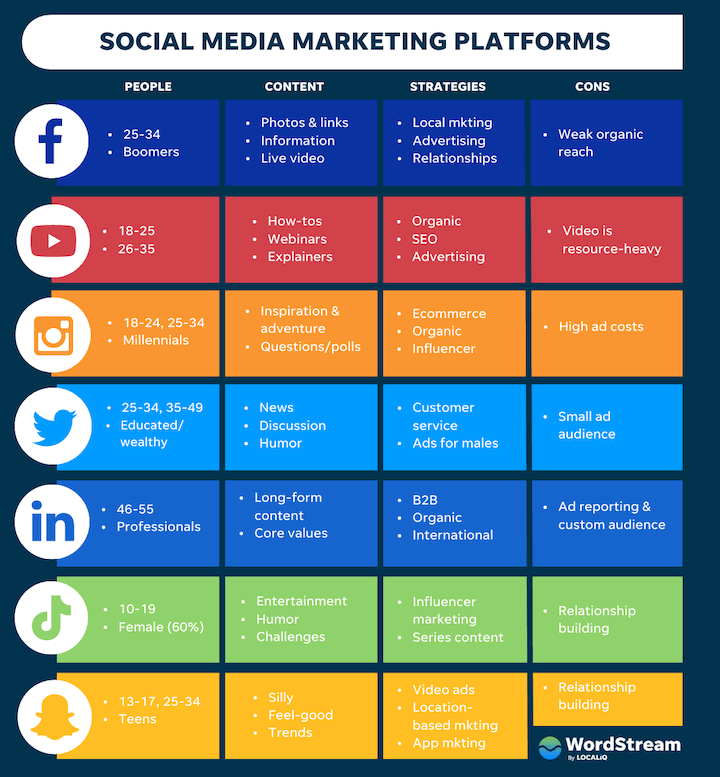
There are many social media platforms available. Each has its unique strengths. Facebook is great for reaching a broad audience. Instagram is popular for visual content. LinkedIn is ideal for professional networking. Twitter is excellent for real-time updates. Choose the platform that best fits your goals.
Engagement Tactics
Engaging with your audience is key. Respond to comments and messages quickly. Create polls and ask questions. Share user-generated content. Host live sessions to interact in real-time. Use stories and reels to keep content fresh. Consistency is crucial for maintaining interest.
Influencer Partnerships
Partnering with influencers can expand your reach. Influencers have loyal followers who trust their opinions. Choose influencers who align with your brand values. Collaborate on content that feels authentic. Monitor the results and adjust your strategy as needed. Successful partnerships can lead to increased brand awareness.

Credit: rockcontent.com
Email Marketing Tactics
Email marketing is like having a direct line to your audience’s inbox. It’s a powerful tool that, when used correctly, can boost engagement and drive sales. But how do you make sure your emails don’t end up in the trash bin? Here are some tactics to help you get the most out of your email marketing campaigns.
Building An Email List
Before you can start sending emails, you need people to send them to. Building an email list is your first step. You can do this by offering something valuable in exchange for email addresses. Think about a free eBook, a discount code, or exclusive access to content.
- Create a sign-up form on your website.
- Use social media to promote your email list.
- Host webinars or online events.
Remember, it’s not just about the number of emails you collect. Quality matters too. Make sure your subscribers are genuinely interested in what you have to offer.
Personalization Techniques
People love feeling special. Personalization can make your emails stand out. It’s more than just using someone’s name. Consider segmenting your email list based on interests, buying behavior, or location. This way, you can send more targeted messages.
Here are some simple personalization techniques:
- Address recipients by their first name.
- Send relevant content based on past purchases.
- Recommend products similar to what they’ve looked at or bought.
Personalization shows your audience that you understand their needs and preferences, making them more likely to engage with your content.
A/b Testing
Not sure which subject line will get more opens? Or which call-to-action will get more clicks? A/B testing is your friend. This tactic involves sending two versions of an email to small segments of your audience to see which performs better. Then, you send the winning version to the rest of your list.
| Element to Test | Examples |
|---|---|
| Subject Line | “50% Off Sale” vs. “Exclusive 50% Discount Just for You!” |
| Call-to-Action | “Shop Now” vs. “Get Your Discount” |
| Email Design | Image-heavy vs. Text-heavy |
Testing different elements helps you understand what resonates best with your audience. It’s a continuous process that can greatly improve your email marketing results over time.
Search Engine Optimization (seo)
Search Engine Optimization (SEO) is a key part of digital marketing. It helps your website rank higher on search engines like Google. This makes it easier for people to find your site. SEO includes various techniques that can be divided into three main categories: On-Page SEO, Off-Page SEO, and Technical SEO.
On-page Seo
On-Page SEO focuses on optimizing content on your website. This includes using the right keywords. Keywords are the words people use to search for things online. Placing these keywords in titles, headers, and content helps search engines understand your page. It also involves using meta tags. Meta tags provide brief information about your page’s content.
Another important part of On-Page SEO is having quality content. Content should be useful and relevant to your audience. High-quality content keeps visitors on your site longer. This can improve your search ranking. Finally, On-Page SEO includes optimizing images. Use alt text to describe images. This helps search engines understand what the image is about.
Off-page Seo
Off-Page SEO involves activities outside your website. One key part is building backlinks. Backlinks are links from other websites to your site. They act like votes of confidence. The more quality backlinks you have, the higher your site will rank. Guest blogging is one way to get backlinks. Write articles for other websites in your industry.
Social media also plays a role in Off-Page SEO. Sharing your content on social media can drive traffic to your site. This can lead to more backlinks. Engaging with your audience on social media can also build your online reputation.
Technical Seo
Technical SEO focuses on the backend of your website. It ensures that search engines can crawl and index your site easily. One important aspect is having a fast-loading site. Slow sites can lead to higher bounce rates. This can hurt your search ranking. Use tools to check and improve your site’s speed.
Another key part of Technical SEO is having a mobile-friendly site. More people are using mobile devices to browse the internet. Your site should look good and work well on all devices. Also, use a secure HTTPS connection. This helps protect your site and builds trust with your visitors.
Pay-per-click (ppc) Advertising
Pay-Per-Click (PPC) advertising is a popular digital marketing strategy. It involves paying a fee each time someone clicks on your ad. It’s a way to buy visits to your site rather than earning them organically. PPC can help businesses get in front of potential customers quickly.
There are different types of PPC ads. Each has its own advantages. Let’s look at some examples.
Google Ads
Google Ads is one of the most popular PPC platforms. Businesses bid on keywords. Their ads appear in Google search results. These ads target users who are actively searching for related terms. This can drive high-quality traffic to your site.
Google Ads also offers display ads. These appear on websites that are part of the Google Display Network. They can increase brand awareness and visibility.
Social media platforms like Facebook, Instagram, and LinkedIn offer PPC advertising. These ads can target users based on their interests, behavior, and demographics. This precise targeting can make your ads more effective.
Social media ads can be in various formats. They can be images, videos, carousels, and more. This flexibility allows you to choose the best format for your message.
Retargeting Campaigns
Retargeting campaigns focus on users who have visited your site but did not convert. These ads remind them of your products or services. They can encourage them to return and complete their purchase.
Retargeting can be done on Google Ads, social media, and other platforms. It can increase conversions and improve ROI.
Affiliate Marketing
Affiliate marketing is a key strategy in digital marketing. It involves partnering with affiliates who promote your products or services. When these partners generate sales or leads, they earn a commission. This method helps businesses reach a wider audience and boost sales without a large upfront investment.
Choosing The Right Partners
Not all affiliates are the same. Choosing the right partners is crucial for success. Look for affiliates with a good reputation and a strong audience. Ensure their values align with your brand. This synergy helps create trust and improves conversion rates. Research potential partners thoroughly before making a decision. Analyze their content and engagement levels. Reliable partners can drive quality traffic to your site.
Commission Structures
Commission structures vary in affiliate marketing. The right structure depends on your goals. Some businesses offer a flat rate per sale. Others prefer a percentage of the sale amount. Consider the value of your product and the effort required from the affiliate. Competitive commissions attract top-tier partners. Ensure the structure is fair and motivating for both parties.
Tracking Performance
Tracking performance is vital in affiliate marketing. Use tracking tools to monitor your affiliates’ activities. These tools provide insights into clicks, conversions, and sales. Accurate tracking helps assess the effectiveness of each partner. Regularly review the data to identify top performers. This information helps refine your strategy and improve results.
Credit: www.wordstream.com
Measuring Success
Digital marketing can be a complex web of strategies, tools, and tactics. But how do we know if all our efforts are paying off? That’s where measuring success comes into play. In this section, we’ll dive into the essential elements of tracking and evaluating your digital marketing performance. Let’s start with understanding what to measure and how to do it effectively.
Key Performance Indicators (kpis)
Key Performance Indicators, or KPIs, are like the heartbeat of your digital marketing strategy. They tell you if you’re on the right track or if you need to switch gears. Some common KPIs include:
- Website Traffic: The number of visitors to your site.
- Conversion Rate: The percentage of visitors who take a desired action.
- Click-Through Rate (CTR): The ratio of users who click on a specific link.
- Customer Acquisition Cost (CAC): The cost to gain a new customer.
- Return on Investment (ROI): The profit from your marketing efforts.
Each of these KPIs provides valuable insights into different aspects of your campaign, helping you to optimize and improve continuously.
Analytics Tools
Tracking KPIs would be impossible without the right tools. Here are some essential analytics tools to help you measure success:
- Google Analytics: A powerful tool to track website traffic and user behavior.
- SEMrush: Great for SEO tracking and competitor analysis.
- HubSpot: An all-in-one tool for inbound marketing, sales, and customer service.
- Hootsuite: Perfect for social media management and analytics.
Using these tools, you can gather data, identify trends, and make informed decisions. They are like the compass guiding your digital marketing journey.
Reporting And Analysis
Collecting data is just the first step; the real magic happens when you analyze and report on it. Effective reporting involves:
- Regular Reports: Monthly or quarterly reports keep everyone updated.
- Visualizations: Charts and graphs make data easier to understand.
- Actionable Insights: Highlight key findings and suggest next steps.
Think of reporting as storytelling with data. You’re not just presenting numbers; you’re narrating the journey of your marketing efforts.
In conclusion, measuring success in digital marketing is vital. By focusing on KPIs, leveraging the right analytics tools, and creating insightful reports, you can ensure that your strategies are effective and continually improving. Remember, it’s not just about working hard; it’s about working smart.
Future Trends In Digital Marketing
The digital marketing landscape is ever-evolving, and staying ahead of the curve is crucial for businesses to thrive. As technology advances, new trends emerge that can significantly impact how we connect with our audience. In this section, we will explore some of the most promising future trends in digital marketing that you need to watch out for. These trends include artificial intelligence, voice search, and interactive content. Let’s dive in and see what the future holds!
Artificial Intelligence
Artificial intelligence (AI) is no longer a concept from science fiction; it’s already transforming the way we do digital marketing. AI can analyze vast amounts of data quickly, providing insights that help marketers create more effective strategies. For example, AI-powered tools can personalize content for individual users, improving engagement and conversion rates.
Imagine a chatbot that not only answers customer queries but also recommends products based on their browsing history. That’s AI at work! Companies that harness the power of AI can deliver more personalized, efficient, and effective marketing campaigns.
Voice Search
With the rise of smart speakers and voice assistants like Alexa, Siri, and Google Assistant, voice search is becoming a significant trend in digital marketing. People are increasingly using voice commands to search for information, make purchases, and interact with their devices.
Optimizing your content for voice search means understanding how people speak, not just how they type. Voice searches tend to be more conversational, so your content should reflect that. For example, instead of optimizing for “best pizza NYC,” you might focus on “Where can I find the best pizza in New York City?” This shift requires a new approach to keyword research and content creation.
Interactive Content
Gone are the days when static content was enough to capture an audience’s attention. Today, interactive content is king. This includes quizzes, polls, interactive infographics, and more. Interactive content engages users by inviting them to participate, making the experience more memorable and enjoyable.
Think about those fun personality quizzes that reveal which superhero you are or interactive infographics that allow you to explore data in a dynamic way. These types of content not only entertain but also provide valuable insights into user preferences and behaviors.
Incorporating interactive content into your digital marketing strategy can lead to higher engagement rates and a deeper connection with your audience. It’s all about creating a two-way conversation rather than a one-sided broadcast.
As we look to the future, embracing these trends will be key to staying competitive in the digital marketing world. By leveraging artificial intelligence, optimizing for voice search, and creating interactive content, you can ensure your marketing efforts are both innovative and effective.
Frequently Asked Questions
What Is Digital Marketing With Example?
Digital marketing promotes products or services using digital channels like social media, search engines, and email. For example, a business uses Facebook ads to reach its audience.
What Are The 4 Major Types Of Digital Marketing?
The 4 major types of digital marketing are content marketing, social media marketing, search engine optimization (SEO), and email marketing.
How Do I Start A Digital Marketer?
learning digital marketing basics through online courses. Gain practical experience with internships or freelancing. Build a strong online presence and network with industry professionals. Stay updated with the latest trends and tools.
What Are The 7 Types Of Digital Marketing?
The 7 types of digital marketing are: Search Engine Optimization (SEO), Content Marketing, Social Media Marketing, Pay-Per-Click (PPC), Affiliate Marketing, Email Marketing, and Mobile Marketing.
Conclusion
Digital marketing offers diverse opportunities for businesses. From social media ads to email campaigns, these strategies drive engagement. Each example shows unique ways to reach your audience effectively. Small tweaks can make a big difference. Experiment with different methods. Measure results and adjust as needed.
Remember, understanding your audience is key. Keep content relevant and engaging. Stay updated with trends to remain competitive. Digital marketing is ever-evolving. Embrace change and keep learning. Successful campaigns require creativity and persistence. Use these examples to inspire and guide your efforts.


0 Comments